Equip-Link Equip-Link

2026 Top DWDM Transceiver Types for Global Buyers

Time:2026-09-08 Author:Ethan
0%

The 2026 optical market is becoming more demanding. Global buyers need capacity, reach, efficiency, and dependable supply. A DWDM transceiver now supports far more than simple wavelength conversion. It can influence network scale, operating costs, and service reliability.

This guide examines leading DWDM transceiver types for international deployment. It covers fixed-wavelength, tunable, coherent, pluggable, and high-capacity 400G solutions. Each type serves different network conditions. A metro link may value compact size and low power. A long-haul route may require stronger dispersion tolerance and advanced modulation. Distance matters.

Practical selection should begin with network evidence, not product labels. Review wavelength grids, channel spacing, fiber type, link budget, temperature range, and management compatibility. Confirm support for standards such as Ethernet, OTN, and relevant vendor platforms. Ask suppliers for test records, optical performance data, lifecycle information, and warranty terms. Experience shows that a promising specification can still fail during integration.

No shortlist is perfect. Some buyers may overvalue transmission speed and overlook power consumption. Others may trust a low price without checking optical monitoring or replacement availability. That assumption can become expensive. Independent testing remains valuable, especially for mixed-vendor networks and difficult field conditions.

The following sections compare these transceiver types through a buyer-focused perspective. They connect technical design with procurement risks, deployment realities, and long-term maintenance. The aim is practical guidance, not a universal answer. Network architecture always decides the best fit.
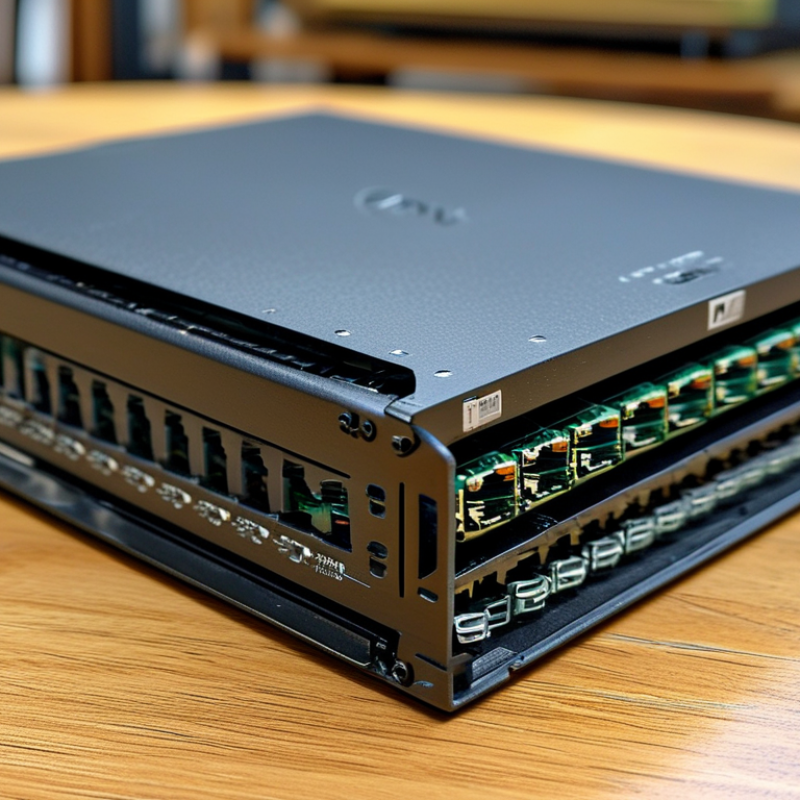
2026 Top DWDM Transceiver Types for Global Buyers

DWDM Transceiver Basics and Core Optical Functions

DWDM transceivers carry multiple optical channels through one fiber pair. Each channel uses a precise wavelength, usually within the C-band. The module converts electrical data into light for transmission. It also converts incoming light back into electrical signals. This two-way process supports high-capacity links without installing additional fiber. Small wavelength errors can create serious channel interference.

Core optical functions include wavelength stabilization, modulation, detection, and signal monitoring. A transmitter controls laser power and maintains a stable optical frequency.

A receiver measures weak incoming signals and filters unwanted noise. Coherent types also process phase and polarization information. Direct-detection types are simpler, but their reach and capacity may be more limited. The choice depends on distance, data rate, fiber quality, and network design.

Field engineers should check optical power budgets before installation. Connector cleanliness matters more than many specification sheets suggest. A single dirty connector can reduce margin and trigger unstable links. Temperature range, channel spacing, dispersion tolerance, and forward error correction also require careful review. Not every long-reach transceiver performs equally across older fiber routes. This is easy to overlook. Practical testing should include DOM readings, loopback checks, and real traffic. A neat datasheet can still hide compatibility problems. DWDM planning needs measurement, not assumptions.

Major DWDM Transceiver Types for Different Network Architectures

2026 Top DWDM Transceiver Types for Global Buyers

Major DWDM Transceiver Types for Different Network Architectures

DWDM transceiver selection should follow the network architecture, not just the advertised data rate. In point-to-point backbone links, fixed-wavelength modules remain practical for stable routes. They offer predictable optical power, simple inventory control, and straightforward commissioning. A 10G or 25G direct-detection module may suit shorter metro spans. Longer connections often require coherent modules with stronger dispersion tolerance and forward error correction.

Different demands apply to ROADM-based mesh networks. Tunable DWDM transceivers can move across assigned channels without replacing the module. This flexibility helps operators reroute traffic during fiber maintenance or capacity upgrades. Coherent 100G, 200G, and 400G pluggables support higher throughput across regional and national paths. They also require careful checks for channel spacing, modulation, baud rate, and receiver sensitivity. Small mismatches can create unstable links.

Data center interconnects usually prioritize compact size, low power, and quick deployment. Coherent pluggables are useful for metro and regional connections, while lower-speed modules may fit short, controlled spans. In practice, technicians should test optical budgets with real patch panels, not ideal diagrams. Monitoring temperature and pre-FEC errors also reveals problems early. No choice is perfect. A tunable module may simplify logistics but increase configuration risk. A fixed module may be cheaper but less adaptable. Buyer requirements can change midway, which makes detailed validation essential.

Key Specifications for Comparing DWDM Transceivers

Choosing a DWDM transceiver starts with the optical specification, not the product label. Global buyers should match the wavelength grid with the network’s channel plan. Common spacing includes 100 GHz and 50 GHz. Narrower spacing supports more channels but demands better wavelength control.

Data rate matters equally. A 100G module may use different modulation and forward error correction than a 400G module. Check the supported line interface, coding method, and maximum reach together. A stated reach of 80 kilometers can change with fiber loss, connector count, and amplifier performance. Ask for power budgets in decibels, not vague distance claims. Small details matter.

Temperature rating is practical, especially in roadside cabinets or unconditioned rooms. Verify operating limits, power consumption, form factor, and connector type before ordering. Digital optical monitoring should report temperature, voltage, bias current, and transmit power. These readings make maintenance more predictable. They also expose aging before service interruption.

Interoperability requires careful testing. Confirm host compatibility, electrical lanes, management protocol, and software recognition. A technically compliant module may still need configuration changes. I have seen installation delays caused by overlooked EEPROM settings. That mistake is avoidable, but not always obvious. Request test records, calibration information, and a clear warranty process. Compliance documentation should cover applicable safety and electromagnetic requirements. No checklist is perfect. Field conditions often reveal assumptions that laboratory tests miss. Test one complete link under realistic traffic before approving a larger purchase.

2026 Top DWDM Transceiver Types for Global Buyers

Key specifications for comparing DWDM transceivers by coherent line rate and representative transmission reach.

Transceiver Type Nominal Line Rate Typical Form Factor Representative Reach Common Use
100G ZR 100 Gb/s QSFP28 Up to 80 km Metro and regional DCI
200G Coherent 200 Gb/s QSFP56 Up to 120 km Metro and regional networks
400ZR 400 Gb/s QSFP-DD or OSFP Up to 80 km Single-span data center interconnect
400ZR+ 400 Gb/s QSFP-DD or OSFP Approximately 500 km Extended-reach DCI and regional links
800G Coherent 800 Gb/s OSFP or QSFP-DD800 Up to 80 km High-capacity data center interconnect

The chart uses representative reach values for comparison. Actual performance depends on fiber loss, span length, optical amplification, modulation format, baud rate, forward error correction, channel spacing, and the installed DWDM line system. Buyers should also verify interoperability, power consumption, operating temperature, telemetry, and pluggable management support.

Choosing DWDM Transceivers for Global Deployment Needs

2026 Top DWDM Transceiver Types for Global Buyers

Choosing DWDM Transceivers for Global Deployment Needs

Global deployment starts with the network, not the transceiver label. A 100G coherent module may suit metro links, while 400G modules can reduce rack space on high-capacity routes. Check reach, channel spacing, modulation, and forward error correction before comparing prices. Short links often need simple specifications. Long submarine or cross-border paths demand tighter optical engineering.

Field experience shows that tunable DWDM transceivers simplify inventory across regions. One adjustable wavelength can support several line plans, if the optical system permits it. Fixed-wavelength modules may cost less and offer predictable operation. They can also create delays when a replacement must cross a border. Confirm grid compatibility, transmit power, receiver sensitivity, and fiber type. Do not rely on a product name alone.

Temperature ratings matter in roadside cabinets and poorly cooled facilities. Power consumption matters in dense data halls. Management support matters during night-time maintenance. Ask for test reports, interoperability evidence, and clear alarm definitions. Standards-based operation improves confidence, but it never replaces live testing. A lab match can still fail on an aging fiber span. That detail is easy to miss.

A practical evaluation should record optical levels at both ends, packet errors, latency, and recovery time. Document the result under normal and high-temperature conditions. I have seen teams select higher capacity too early, then discover limits in their line system. More bandwidth is not always better. It may simply expose an overlooked design weakness.

2026 Top DWDM Transceiver Types for Global Buyers - Choosing DWDM Transceivers for Global Deployment Needs
DWDM Transceiver Type Typical Client Rate Common Form Factors Typical Optical Reach Modulation and FEC Wavelength Operation Typical Power Range Best-Fit Deployment Key Selection Considerations
10G Fixed-Wavelength DWDM 10 Gb/s SFP+, XFP 40–80 km with suitable amplification and dispersion management NRZ; implementation-dependent forward error correction Fixed ITU-T G.694.1 channel, commonly in the C-band Approximately 1.5–3.5 W Legacy metro, regional networks, enterprise interconnection, and gradual capacity upgrades Low acquisition cost and simple operation; requires accurate channel planning and compatible line equipment
25G Fixed-Wavelength DWDM 25 Gb/s SFP28 Up to approximately 80 km in qualified amplified systems NRZ; FEC may be provided by the host or transport platform Fixed ITU-T grid channel, usually C-band Approximately 2.0–4.5 W 5G fronthaul and backhaul, data-center interconnection, and high-density metro access Useful where 10G capacity is insufficient; verify host electrical interface, optical budget, and dispersion limits
100G QSFP28 DWDM 100 Gb/s QSFP28 80–120 km for amplified regional applications; shorter distances are common without amplification Typically DP-QPSK coherent transmission with host or module-based FEC Fixed or tunable C-band channel, depending on module design Approximately 4.5–7.5 W Metro and regional data-center interconnection, mobile transport, and compact DWDM platforms Check whether the module requires a coherent host port, line-system support, and a specified baud rate
100G CFP2-DCO DWDM 100 Gb/s CFP2-DCO Approximately 300–600 km, depending on span loss, amplification, fiber quality, and regeneration design Coherent DP-QPSK with soft-decision FEC Tunable across a defined C-band grid Approximately 15–25 W Long-haul regional networks, OTN transport, and open line systems Provides stronger reach and operational flexibility than basic grey optics, but requires higher power, cooling, and coherent compatibility
200G Coherent Pluggable 200 Gb/s QSFP56-DD, CFP2-DCO, or equivalent coherent pluggable formats Approximately 400–800 km in suitable amplified terrestrial networks DP-16QAM for shorter reaches or DP-QPSK for longer-reach configurations; soft-decision FEC Usually tunable across the C-band Approximately 12–25 W, depending on form factor and operating mode Regional backbone, data-center interconnection, and flexible transport platforms Balance capacity against reach; confirm supported baud rate, FEC mode, spectrum width, and thermal headroom
400G Coherent Pluggable 400 Gb/s QSFP-DD, OSFP, or equivalent high-density coherent formats Approximately 300–1,000 km, depending on modulation, channel spacing, and link engineering DP-16QAM or lower-order coherent modulation with soft-decision FEC Fixed or tunable C-band; flexible-grid operation is common in transport systems Approximately 15–25 W High-capacity metro, regional backbone, open DWDM, and data-center interconnection Confirm switch or router support, host software interoperability, flex-grid requirements, and maximum module power
400G ZR-Class Coherent Pluggable 400 Gb/s QSFP-DD or OSFP Typically up to about 120 km without optical regeneration in engineered point-to-point links High-baud coherent transmission, commonly 16QAM, with standardized high-performance FEC Tunable C-band; commonly designed for a defined channel spacing and optical power range Approximately 15–25 W Data-center interconnection and short regional links that bypass dedicated transponders Efficient for point-to-point links; generally not intended for long amplified multi-span routes or dense ROADM networks
800G Coherent Pluggable 800 Gb/s OSFP, QSFP-DD800, or emerging high-power coherent formats Approximately 80–600 km, depending on mode, baud rate, fiber conditions, and line-system design High-order coherent modulation with soft-decision FEC; multiple operating modes may be available Tunable C-band with flexible-grid support in many transport applications Approximately 20–35 W Very high-capacity data-center interconnection, metro aggregation, and next-generation transport Requires careful validation of host cage type, cooling, optical line-system compatibility, spectrum allocation, and power budget
Tunable DWDM Transceiver 10–800 Gb/s, depending on the optical engine SFP+, SFP28, QSFP28, QSFP-DD, OSFP, CFP2-DCO Determined by the selected rate and coherent design; commonly 40–1,000 km NRZ for lower-rate designs or coherent modulation with FEC for high-rate designs Electronically selectable channels across a specified C-band range Approximately 2–35 W, depending on data rate and form factor Multi-site global deployment, spare-parts reduction, ROADM networks, and rapidly changing network topologies Improves logistics and wavelength flexibility; verify tuning range, channel spacing, management protocol, and line-system restrictions
Fixed-Wavelength DWDM Transceiver 10–400 Gb/s, depending on the optical engine SFP+, SFP28, QSFP28, QSFP-DD, OSFP, CFP2-DCO Approximately 40–1,000 km, depending on rate and optical design NRZ, PAM4, or coherent modulation; FEC depends on the interface One permanently assigned ITU-T DWDM channel Approximately 1.5–25 W Stable point-to-point links and networks with standardized, unchanging wavelength plans Usually simpler to provision and lower in cost; requires maintaining separate inventory for each wavelength
Technical note: Reach, power consumption, modulation, channel spacing, and FEC performance vary by optical design, fiber type, span loss, amplifier configuration, temperature, and host-system compatibility. Always validate the complete link budget and interoperability requirements before global deployment.

Compatibility, Standards, and Procurement Considerations for Buyers

Global buyers are choosing among gray, colored DWDM, tunable, and coherent pluggable transceivers. Compatibility matters more than advertised reach. ITU Facts and Figures 2023 recorded 5.4 billion Internet users worldwide. That growth increases pressure on metro and backbone links.

Check the optical budget, connector polish, lane count, wavelength grid, and temperature range. ITU-T G.694.1 defines DWDM frequency grids, while ITU-T G.698.2 addresses multichannel applications. Ethernet equipment should also match the relevant IEEE 802.3 interface. A 100G module may fit physically but fail operationally. Host firmware, FEC mode, and management coding can still block service.

Procurement teams should request interoperability records, not only a datasheet. Confirm CMIS or SFF-8636 support, DOM accuracy, alarm behavior, and wavelength stability. The 2024 Optical Transceiver Market Analysis indicates strong demand for 400G and higher-speed modules, but deployment conditions remain uneven across regions. That gap matters. A low-cost tunable module may need tighter thermal control and trained technicians. Field checks should include eye diagrams, bit-error testing, and receiver power after patching. Vendor qualification must include lead time, export documentation, warranty response, and replacement consistency. One overlooked detail can delay an entire rack. Test before scaling.

FAQS

: What does a DWDM transceiver do?

: It converts electrical data into light for transmission. It also converts incoming light back into electrical signals. Multiple wavelengths share one fiber pair. Small wavelength errors can cause interference.

Which optical functions are most important?

Key functions include wavelength control, modulation, detection, and signal monitoring. The transmitter stabilizes laser power and frequency. The receiver filters noise from weak signals. Coherent modules also process phase and polarization.

How should I choose between direct-detection and coherent modules?

Direct-detection modules are simpler and may suit shorter links. Coherent modules usually support higher capacity and longer reach. The decision depends on distance, data rate, and fiber quality. More capacity is not always better.

What should engineers check before installation?

Check the optical power budget at both ends. Inspect connector cleanliness and fiber condition. Review channel spacing, dispersion tolerance, and temperature limits. A dirty connector can destabilize the link. Clean connectors matter.

Are tunable modules useful for global deployments?

Tunable modules can reduce spare inventory across different regions. One adjustable wavelength may support several line plans. This works only when the optical system permits it. Fixed-wavelength modules may offer simpler, predictable operation. Neither option is automatically better.

Which compatibility details deserve special attention?

Confirm the wavelength grid, connector type, fiber type, and lane count. Check host firmware, management coding, and forward error correction settings. A module may fit physically but fail operationally. Advertised reach alone proves little.

What tests should buyers request?

Request interoperability records and clear alarm definitions. Check digital monitoring accuracy and wavelength stability. Perform loopback checks, eye-diagram reviews, and bit-error testing. Measure receiver power after patching. Test before scaling.

How should high-capacity modules be evaluated?

Record optical levels, packet errors, latency, and recovery time. Repeat tests under normal and high-temperature conditions. Review power consumption in dense data halls. Check cooling conditions in roadside cabinets. I would not trust a polished datasheet alone.

What procurement risks are easy to overlook?

Confirm lead time, export documents, warranty response, and replacement consistency. Ask whether technicians can manage thermal and optical requirements. A low-cost module may need stricter environmental control. One missing detail can delay an entire rack. Plans can still fail.

Conclusion

This guide explains the fundamentals of DWDM transceiver technology and its role in expanding optical network capacity through wavelength multiplexing. It outlines core optical functions, including wavelength conversion, signal transmission, and high-speed data transport, while introducing major transceiver types designed for different network architectures such as data center interconnects, metro networks, long-haul systems, and flexible optical networks.

The article also highlights the key specifications global buyers should compare, including transmission rate, wavelength range, reach, fiber compatibility, connector type, power consumption, operating temperature, and monitoring capabilities. It provides practical guidance for selecting DWDM transceivers according to deployment distance, network scale, interoperability requirements, and regional infrastructure conditions. In addition, buyers will learn how compatibility, industry standards, compliance documentation, lifecycle support, procurement reliability, and total ownership costs can influence purchasing decisions for global network deployments.

Ethan

Ethan

Ethan is a seasoned marketing professional with a deep expertise in our company's innovative product line. With a passion for sharing knowledge and insights, he takes the lead in regularly updating our corporate blog, where he explores industry trends, product features, and effective marketing......